


Exotic Pets: New Companion Animals
What is an Exotic Pet?
This term refers to New Companion Animals: including rabbits, rodents, guinea pigs, and ferrets, which are the most frequently encountered, but also birds and reptiles, which are seen less often but are becoming increasingly common.
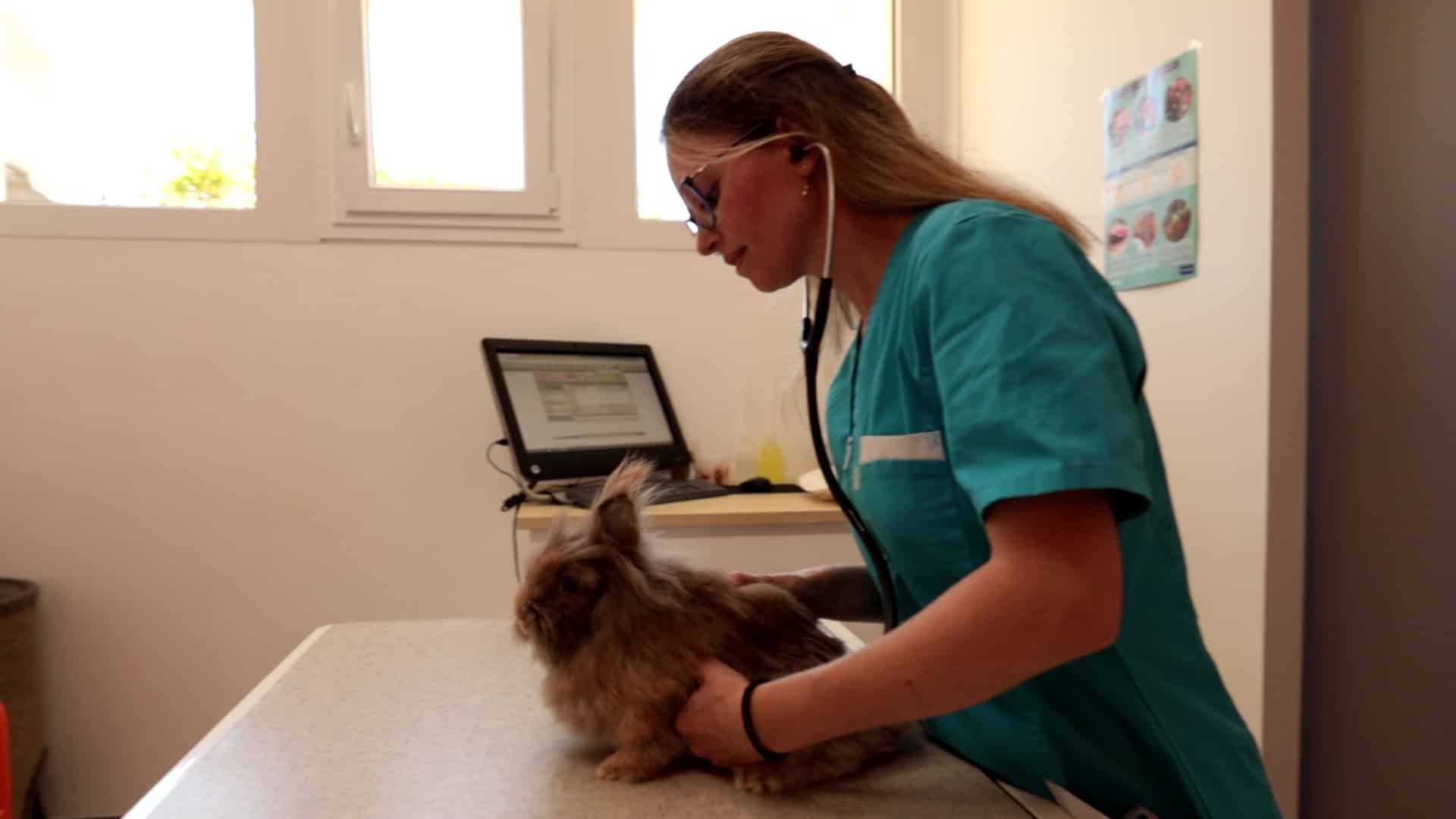
Our exotic pet veterinarian, trained in rabbits, rodents (guinea pigs, hamsters, rats, etc.), and ferrets, will be pleased to welcome you and your small companion to provide necessary care and answer your questions. We offer annual health check-ups, nutritional advice, vaccination consultations, as well as medical consultations and certain surgeries (such as sterilization, dental care, and other more specific surgeries if needed).
We also provide hospitalization when necessary, for example, in cases of slowed transit in rabbits.
For other exotic pets (snakes, etc.) that require much more specific care, please do not hesitate to contact us; we can refer you to colleagues specializing in this field.
Please do not hesitate to contact us for information or to make an appointment.

Answers to Your Questions!
Each exotic pet species has very specific needs, both in terms of environment and diet. Indeed, an environment or diet not suited to your small companion can have disastrous consequences for them.
For example, rabbits have continuously growing teeth; they need to eat good quality hay constantly and fresh vegetables daily (again, not just any kind…) to wear down their teeth and prevent oral injuries or dental abscesses.
Certain species can also benefit from annual vaccinations, which we can provide.
Please do not hesitate to contact us for more information.
Male and female ferrets are very susceptible to hormone-related diseases. In females, heat cycles are permanent, which can lead to hyperestrogenism if the heat lasts longer than a month; fortunately, they cease during mating. This condition can cause very severe bone marrow aplasia, which can be fatal. Sterilization from 5-6 months of age helps prevent this.
Males can develop hormone-related hyperprostatism, which can lead to urethral obstruction. This condition can occur in unneutered male ferrets as well as in sterilized ones when the adrenal gland takes over hormone production. In all cases, solutions exist; please do not hesitate to contact us for more information, and we will be happy to answer your questions.
Male rabbits can be castrated from 6 months of age to prevent urinary marking issues and aggression towards you or other household animals.
From the age of three, testicular tumors can also develop.
Regarding female rabbits, they are unfortunately prone to very common uterine tumors (80% of females over 5 years old develop uterine adenocarcinoma); sterilization helps prevent these age-related problems.
Please do not hesitate to call us for more information.
If your pet goes outdoors or is in contact with other animals that go outdoors, we recommend administering antiparasitics regularly. Please contact our team; we will advise you as best as possible for your companions.
Yes and no… it depends on her weight and especially her age!
Indeed, if your small guinea pig is over 9 months old and has never had a litter before, it is not recommended to breed her, as the pelvic symphysis (which separates during birth to allow the passage of the young) will have fused (generally between 9 and 12 months). Consequently, birth can be complicated and may require a C-section.
The recommended age for breeding is between 5 and 9 months (with a minimum weight of 750g) for a first litter.
If she is too young and does not have sufficient weight, gestation will deplete her reserves and can lead to deficiencies, growth retardation, and difficulties in giving birth because the young are too large.
Generally, guinea pigs give birth naturally without our help and when we are not watching…
Contact us for more information; we will be happy to answer your questions and offer the most suitable solutions for your guinea pig’s care.